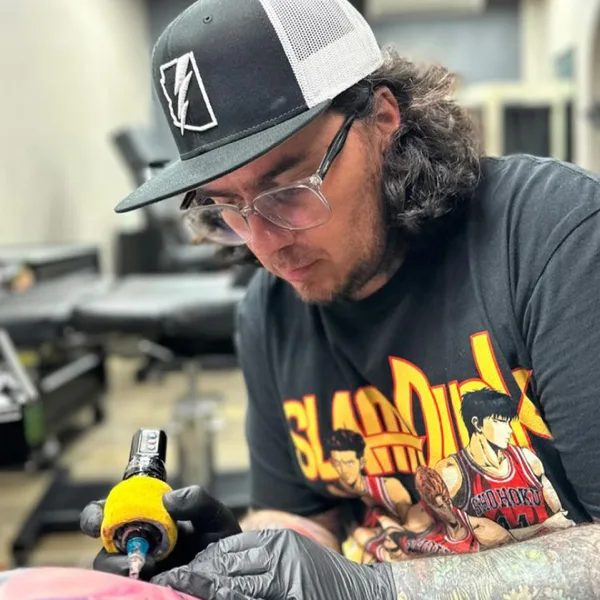
Fine line tattooing is exactly what it sounds like: tattoos made with a single needle, executed with extreme precision, producing lines as thin as 0.3mm. It's a style that demands a steady hand, deep experience, and a nuanced understanding of how skin ages.
Why Fine Line Is Different
Most tattooing uses groupings of needles — five, seven, or more — to pack colour and shade efficiently. Fine line work uses a single needle or a very tight grouping of three. The result is intricate detail, botanical precision, and a style that photographs beautifully in the studio.
But there's a trade-off. Fine line tattoos are more susceptible to blowout if the needle goes too deep, and they require touch-ups more often than bold traditional work. An artist who rushes fine line work will produce a tattoo that fades or blurs within two years.
What to Look For in an Artist
Not every tattooist can do fine line well. Look for an artist who specialises in it — their portfolio should show clean healed work, not just fresh tattoos. Fresh tattoos always look sharp. Healed work tells you everything.
Ask to see photos taken six to twelve months after the session. If lines are still crisp and the detail is intact, you've found your artist.
Placement Matters More Than You Think
Fine line work holds best on areas with relatively stable skin: the outer arm, ribs, thigh, and upper back. Hands, fingers, and areas with a lot of movement or sun exposure are harder — the lines tend to spread and fade faster in those locations.
Talk to your artist about placement before committing. A good artist will steer you toward a spot that serves the design for decades, not just years. If they're willing to do fine line on your palm without pushback, that's a red flag.
Aftercare Is Non-Negotiable
Fine line tattoos are especially sensitive to over-moisturising and sun exposure during healing. Keep the tattoo clean, apply a thin layer of unscented lotion twice a day, and stay out of the sun for the first two weeks. Once healed, SPF is your best friend — UV exposure is the number one cause of fine line fading.